
Leading Organizational Transformation at Black Tie Dinner
Organization: Black Tie Dinner
Timeline: 2022-2025
Role: Co-Chair Elect (2022), Junior Co-Chair (2023), Senior Co-Chair (2024)
Responsibilities: Organizational Strategy, Brand Strategy, Change Management, Board Governance, Stakeholder Alignment, Digital Transformation, Community Engagement
Executive Summary
When I entered Black Tie Dinner leadership in 2022, the organization had more than four decades of extraordinary history and impact. It had become one of the nation's largest LGBTQ+ fundraising dinners, yet many of its internal systems, governance structures, brand messaging, and technology had evolved independently over time.
Rather than approaching these as isolated projects, I proposed a broader organizational transformation designed to prepare Black Tie Dinner for its next 40 years.
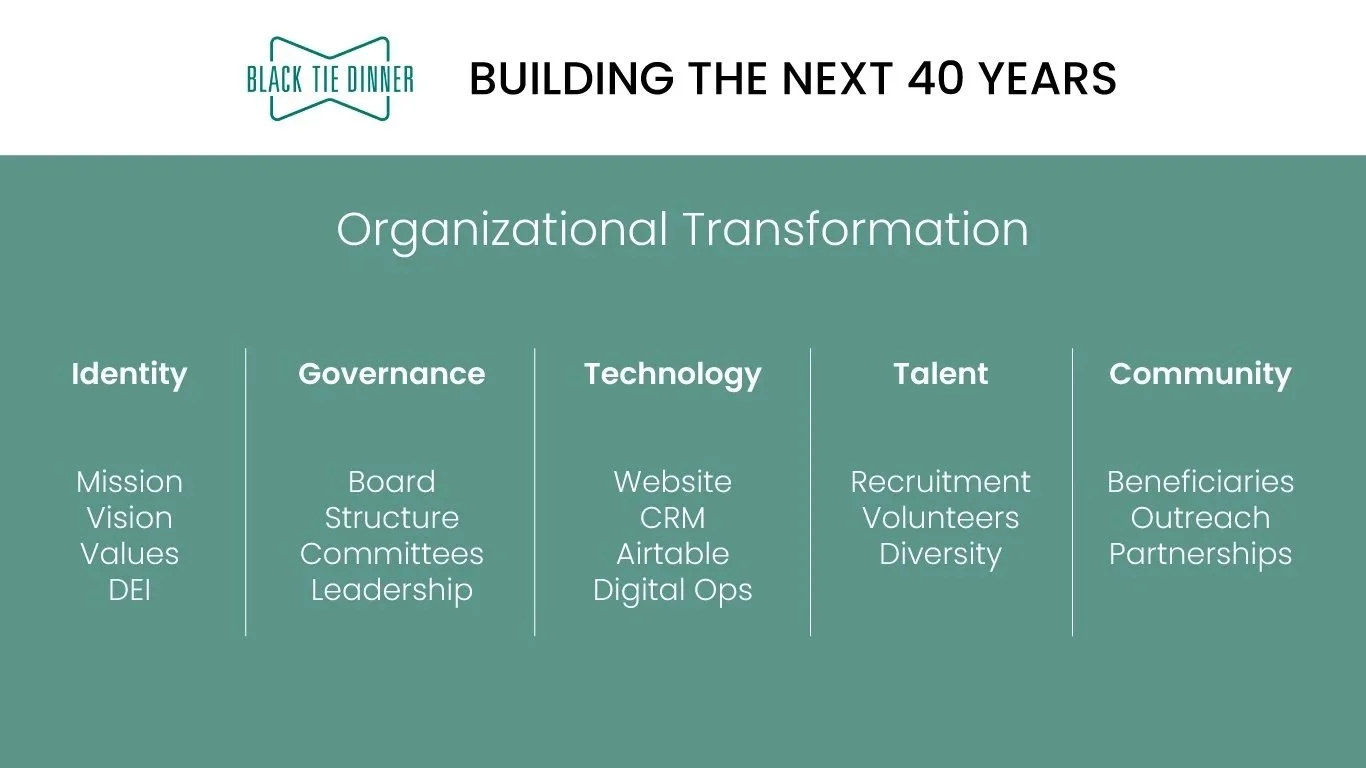
Working alongside fellow board leaders, advisory members, committee chairs, and strategic partners, I spearheaded a multi-year modernization initiative focused on five interconnected pillars:
Organizational Identity
Governance & Leadership
Digital Transformation
Community Growth
Operational Excellence
The initiative resulted in a more scalable organizational structure, modernized brand platform, improved board recruitment and diversity, enhanced volunteer engagement, updated digital infrastructure, and more inclusive community outreach.
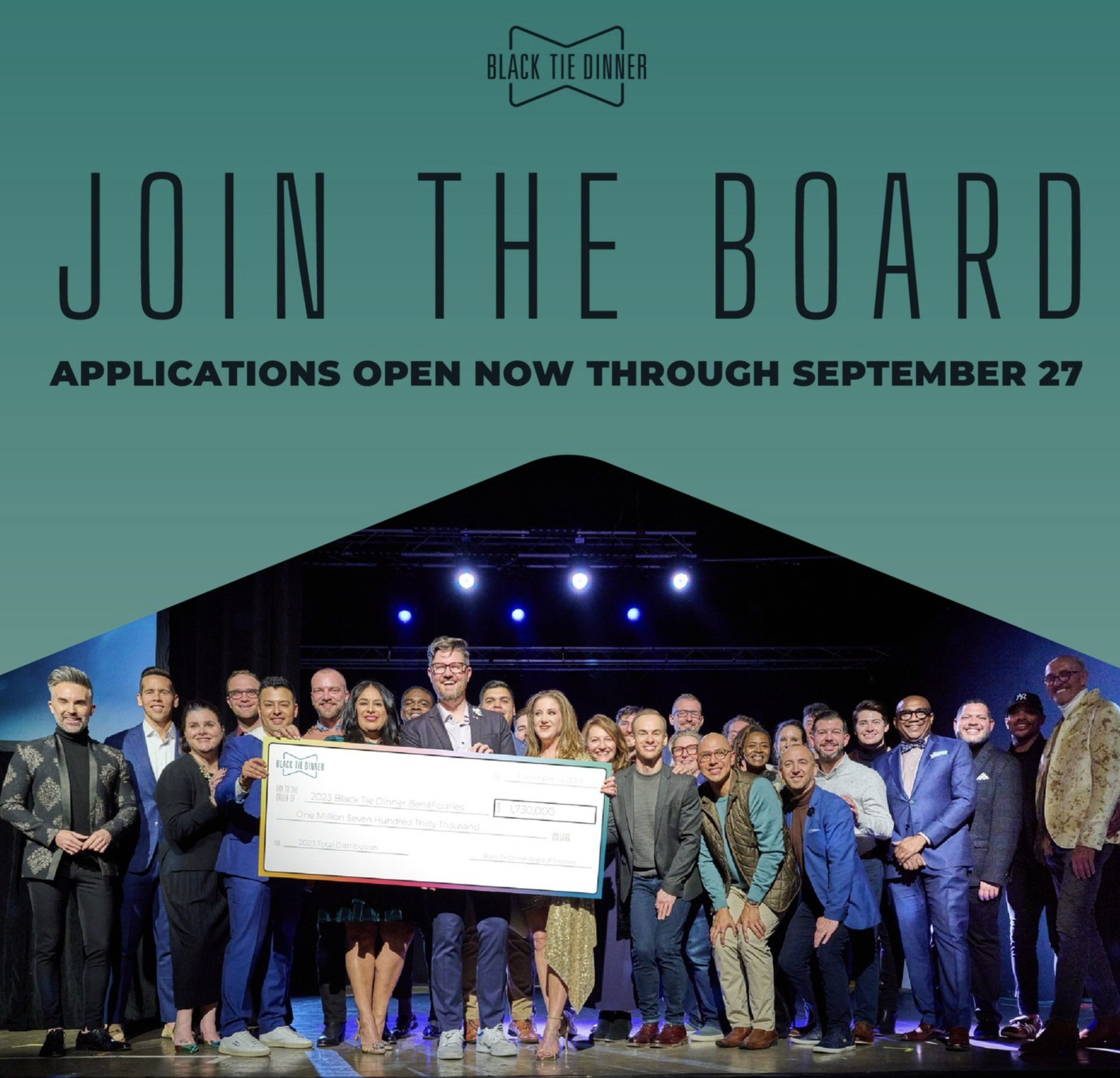
During the first full year operating under many of these new systems, Black Tie Dinner achieved the largest charitable distribution in its history, awarding more than $1.7 million, including $1 million to local beneficiaries for the first time.
The Challenge
Black Tie Dinner had built an extraordinary legacy over more than 40 years.
Like many long-standing nonprofit organizations, however, growth had outpaced many of the systems supporting it.
The organization faced several interconnected challenges:
An outdated organizational structure that concentrated execution among a small number of board leaders.
Mission and brand messaging that no longer fully reflected the organization's future direction.
No formal vision statement to align long-term strategic planning.
No established organizational core values.
No formal Diversity, Equity & Inclusion statement.
Legacy technology that limited scalability and depended heavily on a proprietary system maintained by a single developer.
Recruitment practices that limited opportunities to engage new and more diverse leadership.
A beneficiary selection process that relied largely on existing organizational relationships rather than broader community outreach.
Individually, each challenge was manageable.
Collectively, they represented an opportunity to modernize how Black Tie Dinner operated while preserving the history and culture that made the organization successful.
The Insight
Organizational transformation cannot happen through branding alone.
A new website cannot fix governance.
A mission statement cannot improve technology.
A CRM cannot strengthen culture.
Lasting change requires alignment across people, processes, systems, and purpose.
Rather than treating each initiative independently, I developed a transformation strategy that connected every improvement to a shared vision for Black Tie Dinner's future.
The Transformation Strategy
Pillar One - Organizational Identity
The first priority was creating greater organizational clarity.
Working collaboratively with board leadership and advisory members, I developed the initial framework for an entirely new brand platform, including:
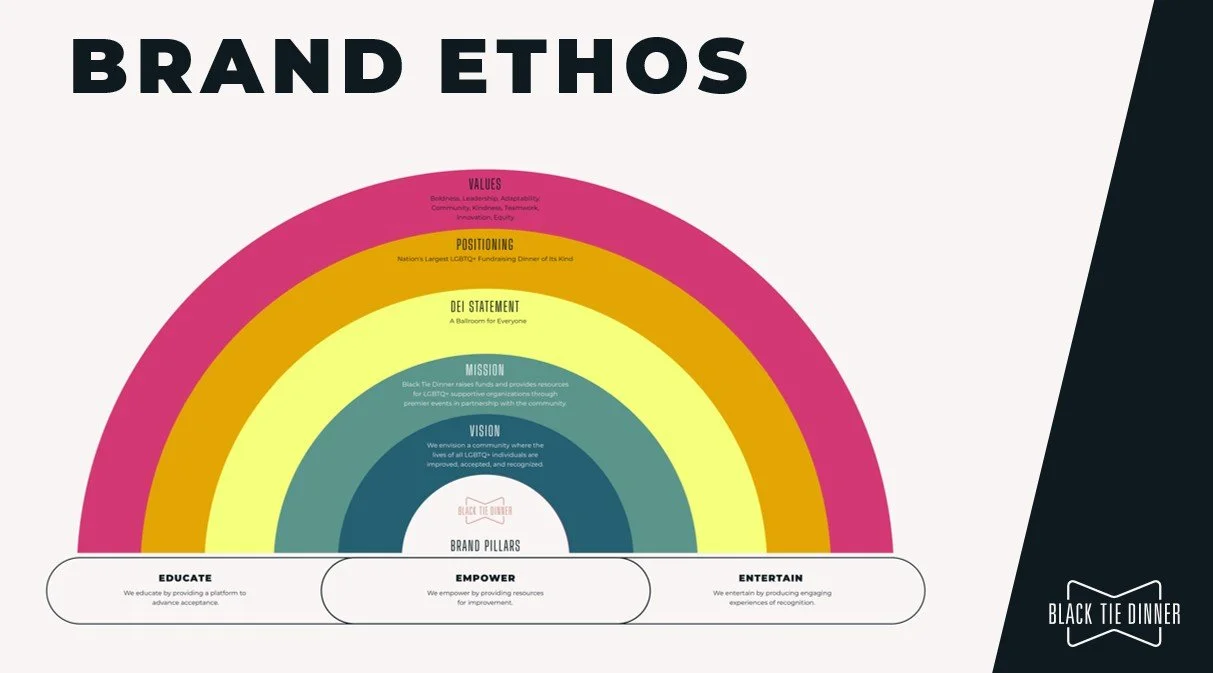
A simplified organizational Mission Statement
Black Tie Dinner's first formal Vision Statement
Three Purpose Pillars that became the organization's "why"
Organizational Core Values
The organization's first Diversity, Equity & Inclusion Statement
Rather than presenting finished work, I intentionally created first drafts that invited collaboration across committees and advisory leadership, allowing broad participation and open dialogue while maintaining strategic alignment.
Purpose Pillars
Educate
Providing a platform that advances acceptance.
Empower
Providing resources that improve LGBTQ+ lives.
Entertain
Creating engaging experiences that recognize and celebrate the community.
These pillars became the strategic lens through which future organizational decisions could be evaluated.
Vision Statement
We envision a community where the lives of all LGBTQ+ individuals are improved, accepted, and recognized.
Mission Statement
Black Tie Dinner raises funds and provides resources for LGBTQ+ supportive organizations through premier events in partnership with the community.
Pillar Two - Governance & Leadership
Following a strategic planning engagement facilitated by Sendero Consulting, I led the redesign of Black Tie Dinner's board structure.
Having served on the board since 2017, I was able to evaluate the organization from both a historical and operational perspective.
The objective was simple:
Shift committee chairs from being primary executors into strategic leaders who could empower others while focusing on innovation and long-term planning.
Key organizational changes included:
Expanded the Board of Directors from 25 to 30 members.
Introduced Committee Lead roles beneath each committee chair.
Distributed ownership across additional volunteers.
Increased leadership opportunities for emerging board members.
Reduced dependence on a small number of individuals.
Created a more scalable governance model for future growth.
The result was a structure that better leveraged volunteer talent while creating greater accountability and succession planning throughout the organization.
Pillar Three - Digital Transformation
Technology modernization became another key focus.
Our existing proprietary CRM had served the organization well for many years but had become increasingly difficult to maintain and scale.
As Co-Chair, I championed the exploration of more sustainable technology solutions while supporting Operations and Marketing leadership through a multi-year transition.
Key initiatives included:
Sponsoring migration from a proprietary CRM toward OneCause.
Supporting implementation of Airtable for project management, volunteer coordination, committee operations, and workflow management.
Helping lead strategy and information architecture for a completely redesigned website.
Creating a scalable digital platform that allowed multiple board members to manage content without relying on a single administrator.
The website transformation significantly improved operational agility by enabling faster updates, integrated volunteer workflows, online donations, event-specific landing pages, and expanded fundraising opportunities, including an online merchandise store.

Pillar Four - Talent & Community Growth
Modern organizations require modern recruitment.
Historically, board recruitment occurred during a short annual application (read: friends of current board members) window followed by a brief meet-and-greet before elections.
Having served as Board Governance Chair in 2021, I had begun implementing new processes for recruitment, and in 2022 I helped champion a relationship-first recruitment strategy that emphasized year-round engagement.
The updated process included:
Community networking events throughout the year.
Volunteer-first engagement opportunities.
Structured pathways from volunteer to board candidate.
Longer candidate engagement before elections.
Recruitment intentionally opened to the broader community.
The results included:
Applicant pool increased from approximately 15 candidates to as many as 30 annually.
Volunteer participation grew beyond available opportunities.
Black Tie Dinner's most diverse Board of Directors in organizational history.
The 2024 board included:
7 women
8 people of color
4 allies
1 transgender board member
1 queer/nonbinary board member
The organization's first ally Latina Co-Chair
Pillar Five - Community Impact
In 2023 and 2024, I partnered with my Co-Chairs and Community Relations leadership to modernize the beneficiary recruitment process.
Rather than relying primarily on previous applicants, the organization expanded marketing and outreach efforts to attract new nonprofit partners across North Texas.
Results included:
Beneficiary applications increased from approximately 20–23 organizations to more than 35.
Greater organizational visibility across the nonprofit community.
Increased diversity among applicant organizations.
Consistent introduction of new beneficiary partners each year.
This approach strengthened both the organization's impact and its connection to the communities it serves.
Building Alignment
One of the greatest challenges was not designing better systems.
It was creating enough trust that a volunteer board would embrace meaningful change.
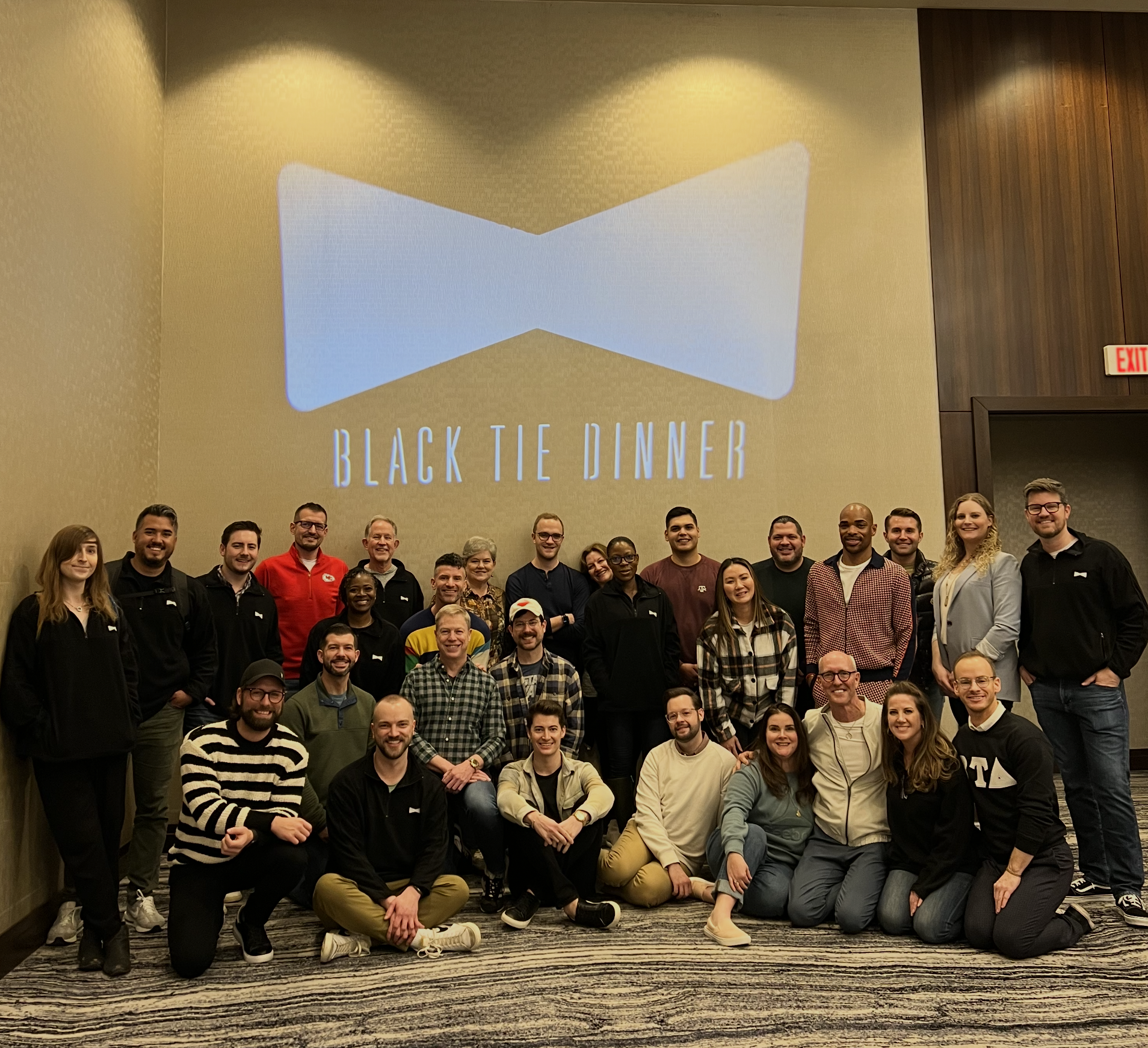
Rather than introducing sweeping reforms all at once, I spent nearly a year building alignment through committee discussions, advisory conversations, individual stakeholder meetings, and transparent communication before major recommendations reached the board.
This deliberate approach minimized resistance and allowed key initiatives—including the Mission Statement, Vision Statement, and inaugural DEI Statement—to receive unanimous board approval.
The experience reinforced one of my core leadership beliefs:
Sustainable change happens when people feel they helped build it.
Leadership Highlights
Throughout the transformation, I:
Spearheaded the organizational modernization strategy.
Developed the initial framework for the Mission, Vision, and Purpose Pillars.
Created the BLACK TIE Core Values framework.
Concepted the organization's first DEI initiative and assembled a diverse committee to shape its final form.
Led governance redesign efforts.
Built board-wide alignment around transformational change.
Sponsored technology modernization across operations and marketing.
Helped guide website strategy and digital evolution.
Partnered across committees to ensure broad ownership of implementation.
Organizational Impact
The transformation established a stronger foundation for Black Tie Dinner's future by aligning strategy, governance, technology, culture, and community engagement around a shared vision.
Key outcomes included:
Modernized organizational identity
First formal Vision Statement
New Mission Statement
Three organizational Purpose Pillars
BLACK TIE Core Values framework
First Diversity, Equity & Inclusion Statement
Expanded and more scalable governance structure
Modern digital infrastructure
Improved volunteer and board recruitment
Enhanced beneficiary outreach
Most diverse Board of Directors in organizational history
Greater operational efficiency across committees
During the first full year operating under many of these new systems and strategies, Black Tie Dinner achieved the largest charitable distribution in its history, awarding more than $1.7 million, including $1 million to local beneficiaries for the first time.